

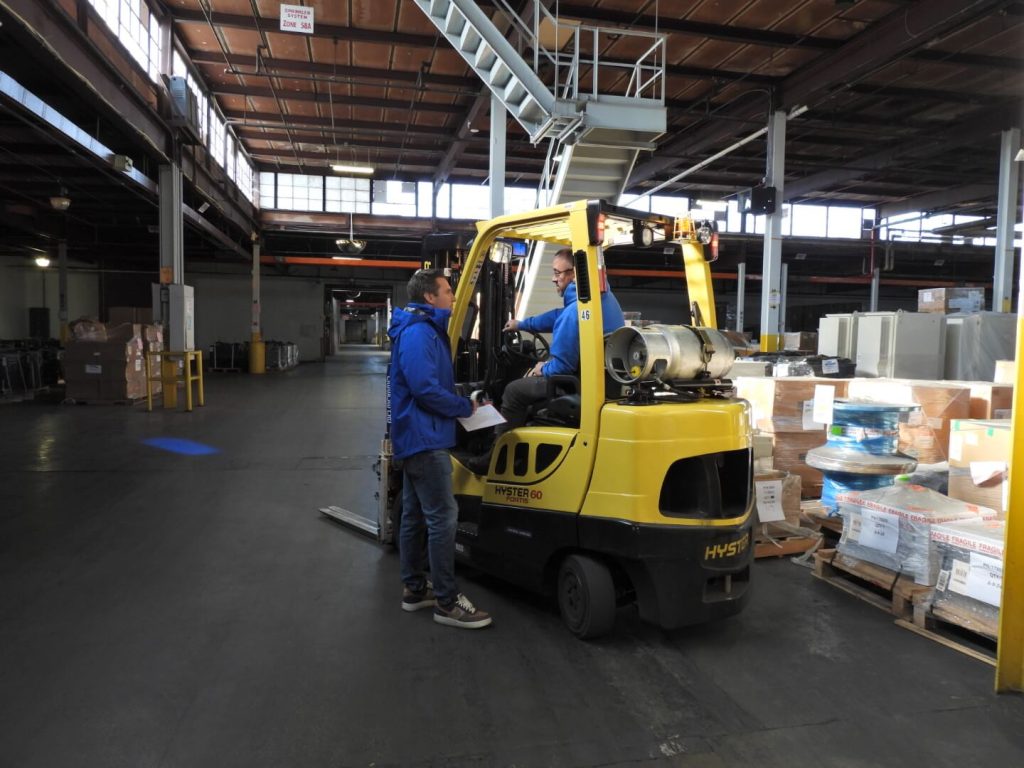
Warehouses are the backbone of modern logistics, ensuring that products move efficiently from suppliers to customers. While most people only see the end result—a package arriving at their doorstep or a shipment reaching a store—there is an intricate process behind the scenes. Here’s what a typical day looks like in Stone Management’s warehouse.
Customer Service First
The day begins with a focus on customer service and administrative duties. Before the physical work starts, our warehouse managers and customer service representatives check for any updates to scheduled orders. For us, it’s crucial to compare overnight changes against the Warehouse Management System (WMS) and OpenDock scheduling platform to ensure that everything aligns. Customers may have updated their orders, delayed shipments, or requested additional stock, so this step ensures that our warehouse operates with accuracy.
Loading and Unloading
As the administrative team finalizes order changes, warehouse employees are already busy on the floor. The morning hours are dedicated to loading and unloading trucks. Efficiency and accuracy are key—mislabeled shipments or misplaced items could cause delays further down the line if not corrected.
While some employees focus on incoming shipments, others are fulfilling outbound orders. They ensure that each order meets customer specifications before being loaded onto trucks. Speed is essential, but so is accuracy—every package must match the order details before it leaves the facility.
Inventory Checks
By midday, the bulk of the morning’s shipments have been processed. This is a critical time for inventory checks and workflow adjustments. Employees verify that all received goods have been accurately logged into the WMS and stored in their designated locations. If discrepancies arise, they must be addressed immediately to prevent future issues.
Preparation for Tomorrow
As the day progresses, attention shifts to the following day’s shipments. Employees review upcoming orders and compare data between the WMS and OpenDock to confirm what is scheduled against what customers have actually communicated. Any inconsistencies are flagged and resolved.
This is also the time for pre-staging—positioning high-priority inventory in accessible areas to ensure an efficient start the next morning.
Closing Operations
Before employees clock out, final checks ensure that all orders are accounted for, inventory is properly organized, and equipment is secured.
A well-run warehouse doesn’t just focus on the present—it’s always looking ahead. By maintaining a balance between efficiency and accuracy, warehouses ensure that products move seamlessly through the supply chain, keeping businesses and customers satisfied.
Start Warehousing with Stone Management Today
As you can see in our day-to-day operations, we prioritize accuracy, efficiency, and customer satisfaction. Contact us today to learn more about how we can help your business operate!