

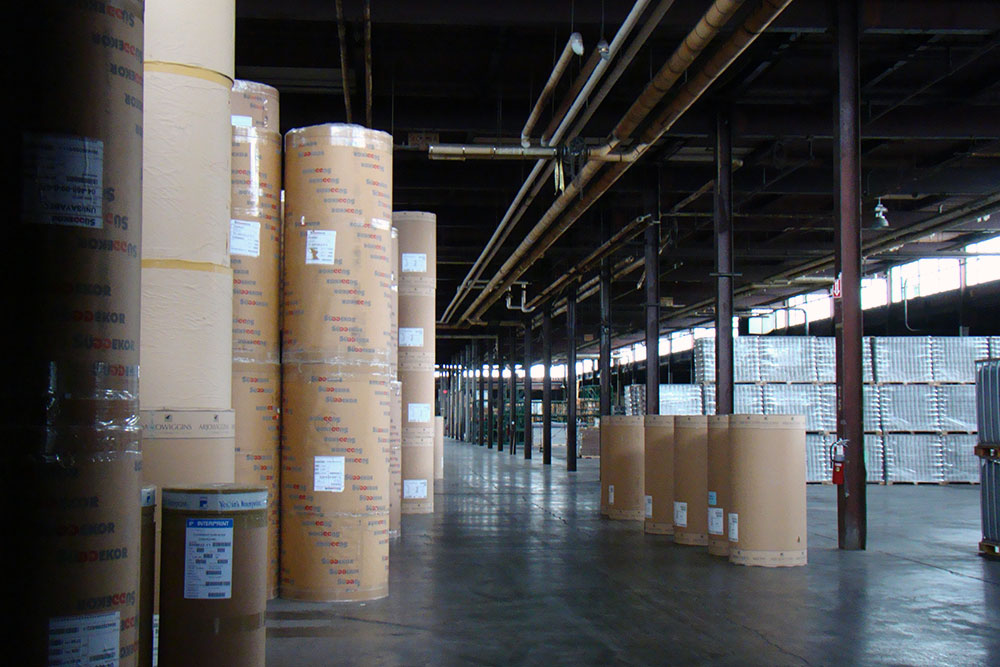
The top 3PL warehouses for paper manufacturers include Stone Management (Albany, NY), Buske Logistics (national), WSI (Stevens Point, WI), and Pival (heavy-roll specialist). The best partner comes down to specialized roll handling, humidity control, and proximity to your mills, ports, and markets, because paper damage and inefficient freight are where margin quietly leaks. General-freight warehousing is not built for paper, so industry specialization should be the first filter, not the last.
This guide is for supply chain leaders at mills, converters, and paper distributors. Paper is one of the hardest product categories to warehouse and move well, and the wrong 3PL costs you in damaged product and freight you should not be paying. Below is what makes paper logistics different, how to evaluate a paper-industry 3PL, the top providers in the market, and how to choose.
What makes paper logistics different from general warehousing?
Paper logistics is different because paper is heavy, dense, and sensitive to its environment. Heavy rolls shift and crush under poor handling, cartons and bales damage at the edges, and small humidity swings can curl, warp, or ruin finished product. Moving paper well requires purpose-built handling such as roll clamps, slip-sheets, and climate-controlled bulk space, plus crews trained for the category.
The financial stakes are concentrated in two places: damage and freight. A specialist 3PL protects margin you would otherwise lose to product write-offs and to trailers that are not loaded for paper’s weight and density. That is why specialization, not square footage, is the right starting filter.
How do you evaluate a paper-industry 3PL?
Evaluate a paper 3PL against five criteria, weighted toward your biggest risk, whether that is product damage or freight cost.
- Specialized handling equipment. Roll clamps, slip-sheet capability, reinforced staging, and trained crews are the baseline. General-freight handling is how rolls get damaged.
- Climate and humidity control. Paper is hygroscopic, meaning it absorbs and reacts to moisture. Regulated warehouse conditions prevent the curling, warping, and moisture loss that downgrade product quality.
- Bulk, high-cube storage with FIFO discipline. Paper moves in volume and ages, so you want high-cube bulk capacity, clean stock-keeping unit (SKU) tracking, and first-in-first-out (FIFO) workflows for raw pulp and finished goods alike.
- Freight optimization. Because paper is heavy and dense, a provider that optimizes trailer loading, freight pooling, and mode selection (truck versus rail) drives down cost per ton in a way that compounds across every shipment.
- Location relative to your mills, ports, and markets. Inland freight is the silent cost. Proximity to your production, your customers, or the ports you import through is where the real savings sit.
Which are the top 3PL warehouses for paper manufacturers?
These providers each bring a distinct strength to paper logistics. Match them to your geography and your product mix.
Stone Management (Albany, NY)
Stone Management has served the paper industry since 1986, handling pulp, rolls, and specialty paper products for both domestic mills and international suppliers, particularly those importing from Europe. Its Albany location sits close to the Port of Albany, which lets paper clients cut inland freight costs while staying within overnight reach of major Northeast markets. With more than 800,000 square feet, public and dedicated options, and no minimum pallet requirement, it flexes from startup volume to enterprise programs. Best for: paper manufacturers and importers distributing into the Northeast or bringing product in through Atlantic ports.
Buske Logistics (national network)
With more than a century in logistics, Buske runs a national footprint and treats pulp and paper as a dedicated vertical, offering roll clamping, slip-sheet handling, humidity monitoring, vendor-managed inventory, and retail-compliance support such as EDI, labeling, and routing for big-box channels. Best for: large mills and converters that need national coverage plus retail-channel compliance.
WSI / Warehouse Specialists (Stevens Point, WI)
WSI is a long-standing paper and forest-products 3PL anchored in the heart of Wisconsin’s paper corridor, pairing bulk warehousing with rail access and combined transportation management. Best for: Midwest mills that want bulk capacity, rail, and coordinated warehouse-plus-trucking service near the country’s densest paper region.
Pival (heavy-roll specialist)
With more than 20 years moving large rolls, corrugated sheets, and raw pulp using specialized clamps and reinforced trailers, Pival focuses on damage prevention and on balancing truck and rail payloads, with strength in cross-border Canadian lanes. Best for: producers shipping heavy rolls or running cross-border North American logistics.
How do you choose the right paper 3PL?
Choose your paper 3PL by ranking your two biggest cost and risk drivers: damage and freight. If product integrity is the constant worry, prioritize a provider whose handling equipment and climate control are genuinely built for paper rather than retrofitted from general freight. If freight cost dominates, weight proximity and mode flexibility most heavily.
Then map geography honestly. A Wisconsin mill and a Northeast importer have very different right answers. If your product flows into the Northeast or arrives by ship from Europe, a partner near the Port of Albany can take real cost out of every inland mile while keeping you close to your end markets. Request a quote to size the savings against your roll volume, lanes, and storage profile.
Frequently asked questions
What is a paper 3PL?
A paper 3PL is a third-party logistics provider that specializes in warehousing and transporting paper products such as rolls, pulp, and finished paper goods. Unlike general warehouses, a paper 3PL uses roll clamps, slip-sheets, climate control, and freight strategies built for paper’s weight, density, and sensitivity to moisture.
Why does paper need humidity control?
Paper is hygroscopic, meaning it absorbs and releases moisture from the surrounding air. Without regulated humidity, paper can curl, warp, expand, or lose moisture, all of which degrade quality and can render finished product unusable.
What is roll clamp handling?
Roll clamp handling uses a specialized forklift attachment that grips paper rolls by their sides instead of lifting them on forks. This prevents the crushing, telescoping, and edge damage that standard fork handling causes to rolls.
How do paper manufacturers reduce freight costs?
Paper manufacturers reduce freight costs by optimizing trailer loading for weight and density, pooling freight, selecting the right mode (truck versus rail), and positioning inventory close to ports and end markets to cut inland miles.
Conclusion
The top 3PL warehouses for paper manufacturers each excel at a different part of the problem, so the right partner is the one whose handling, climate control, and location match your product and your lanes. If your paper flows into the Northeast or arrives through Atlantic ports, a specialist like Stone Management can protect both product integrity and freight cost. Request a quote to build a paper-specific warehousing and freight plan around how your product actually moves.